7 Jul 2026 · Roadworthy
Driving instructor insurance in the UK explained
What does driving instructor insurance in the UK cover? Read our guide on dual control policies, public liability, and how to find the right cover.
What is specialist driving instructor insurance?
A standard car insurance policy only covers social, domestic, and pleasure uses. Even a standard business class policy is insufficient for those who teach others how to drive. Driving instructor insurance is a highly specialised product designed specifically for the risks associated with in-car tuition. It legally permits an unlicensed or newly learning driver to operate your vehicle under your supervision on public roads.
If you charge a fee for driving lessons without this specific cover, your insurance is invalid. You could face prosecution for driving without insurance, and your vehicle could be impounded by the police. Modern instructors often use digital platforms like Rwapp to manage their pupils and bookings, but securing the correct physical and legal protection on the road remains the most critical step of running a tuition business. The Road Traffic Act requires anyone providing paid tuition to have insurance that explicitly covers hire and reward activities, which is a key component of these specialist policies.
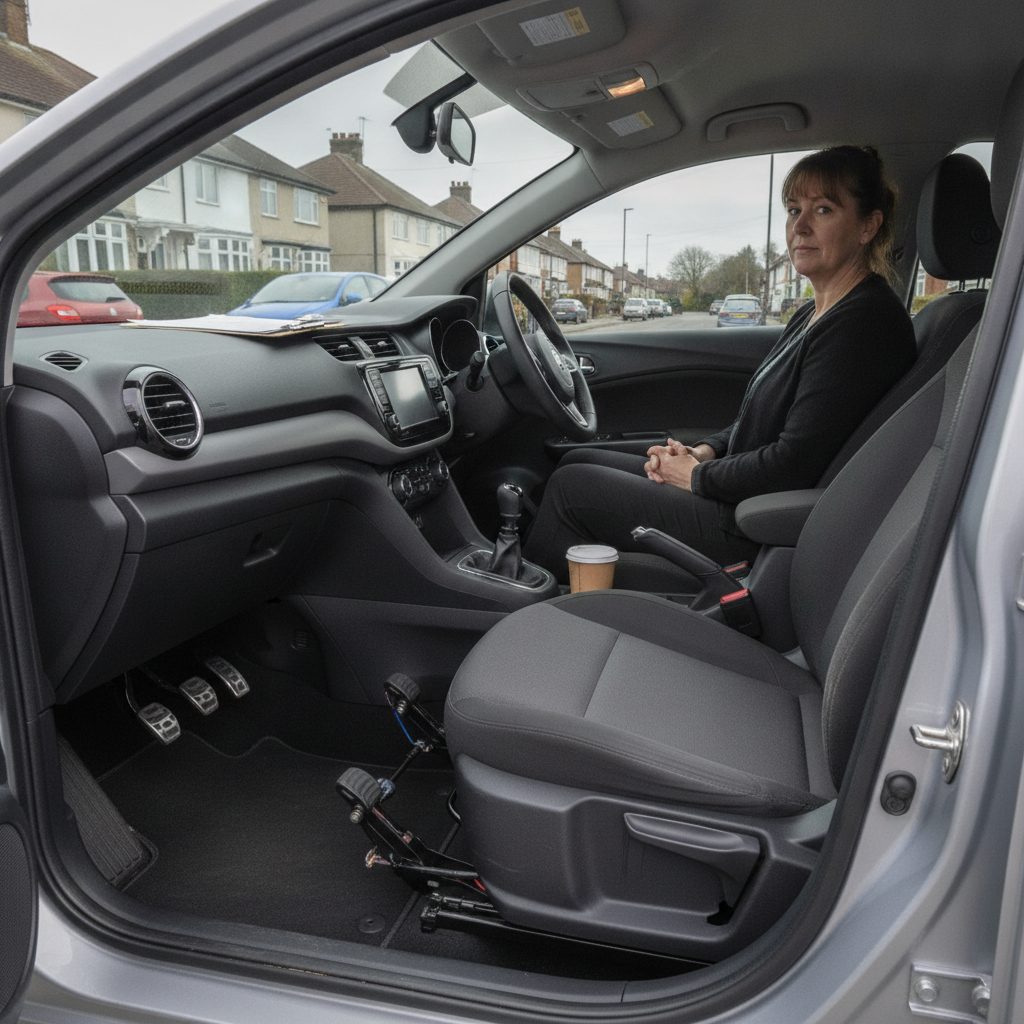
This cover protects both you and your pupil during every lesson. It accounts for the fact that the person behind the wheel does not hold a full driving licence and is highly likely to make mistakes. The policy must also cover the dual controls fitted to your vehicle, which are standard equipment for almost all UK instructors. Without this, any damage to the dual control system itself during an incident might not be covered, leaving you with expensive repair bills.
Key types of cover you need
When you set up a tuition policy, you will encounter several different types of cover. Understanding what each element protects is crucial for keeping your business safe from liability claims.
Most specialist providers bundle these protections together, but you must double-check the policy documents to ensure you have adequate limits for each category.
| Type of Cover | What It Protects | Why It Is Essential |
|---|---|---|
| Third Party, Fire and Theft | Damage to other vehicles, plus fire damage or theft of your own car. | The bare legal minimum, though rarely sufficient for professional instructors. |
| Comprehensive Tuition Cover | Accidental damage to your own vehicle, even when a pupil is driving. | Protects your primary business asset from learner driver mistakes. |
| Public Liability | Claims from third parties for injury or property damage outside the vehicle. | Covers incidents like a pupil hitting a pedestrian or damaging property. |
| Professional Indemnity | Claims of negligent tuition or bad advice that leads to financial loss. | Protects your reputation and finances if a pupil sues over poor teaching. |
Comprehensive cover is the standard choice for professional instructors. If your tuition vehicle is off the road due to an accident, your income stops immediately. Therefore, relying on lower levels of cover like third-party only is highly risky for your livelihood.
The difference between ADI and PDI policies
The UK government classifies driving instructors into two main categories: Approved Driving Instructors (ADIs) who have passed all three qualifying exams, and Potential Driving Instructors (PDIs) who are still gaining experience under a trainee licence. The DVSA regulates both groups strictly, but insurers view them through different risk lenses.
Insurance companies view these two groups differently. A PDI is statistically more likely to be involved in an incident because they have less teaching experience under pressure. As a result, PDI insurance is often more expensive than ADI insurance. Some insurers may also place restrictions on PDI policies, such as limiting the number of hours you can teach per week or requiring additional supervision from a qualified ADI.
Once you pass your Part 3 exam and become a fully qualified ADI, you must inform your insurer immediately. Your premium will likely decrease, and you will gain access to a wider variety of specialist policies. Failing to update your status from PDI to ADI could lead to you paying higher premiums than necessary, or worse, having a claim rejected because your licence details on the policy do not match your actual qualifications.
How much does driving instructor insurance cost?
The cost of driving instructor insurance in the UK varies widely based on individual circumstances. On average, you can expect to pay anywhere from £500 to £1,500 per year for a comprehensive policy. This is higher than standard car insurance due to the increased risk of accidents with learner drivers.
Several factors influence your final premium quote:
- Your location: Instructors operating in busy urban areas like London, Manchester, or Birmingham will pay more than those in rural locations.
- Your teaching history: Years of experience as an ADI and a clean claims record will significantly lower your costs.
- The tuition vehicle: Small, low-engine hatchback cars in low insurance groups are much cheaper to cover than larger or premium vehicles.
- Annual mileage: High annual mileage increases your exposure to risk, which raises the premium.
It is wise to obtain multiple quotes from specialist brokers rather than standard comparison sites, as mainstream insurers often do not understand the specific risks of dual-control tuition.
Essential policy add-ons to consider
Standard comprehensive cover is a good starting point, but most instructors require additional policy features to keep their business running smoothly. When choosing a policy, look for these key add-ons.
A dual-control courtesy car is perhaps the most important add-on. If your car is damaged in an accident, a standard courtesy car will not have dual controls, meaning you cannot use it for lessons. A specialist policy guarantees a dual-control replacement vehicle, often within 24 to 48 hours, allowing you to maintain your lesson schedule and avoid losing income from cancelled bookings.
Negligent tuition cover is another valuable addition. This protects you if a pupil claims that your instruction was incorrect or unsafe, leading to an accident or a failed test. It covers legal fees and any compensation costs that may arise from such claims, which is vital for protecting your professional reputation.
You should also consider off-road tuition cover. If you teach pupils under the age of 17 on private land, such as disused airfields or dedicated training areas, standard road policies will not cover you. Off-road cover ensures you are protected during these early-stage lessons. Finally, specialist breakdown cover that includes passenger onward travel is essential, as it ensures both you and your pupil are not left stranded on the roadside during a lesson.
How to lower your insurance premiums
While driving instructor insurance is a necessary business expense, there are several practical steps you can take to reduce your annual premiums.
First, choose your tuition vehicle carefully. Opt for cars with high safety ratings and low insurance groups. Vehicles equipped with modern safety features, such as autonomous emergency braking, often qualify for lower rates. Keeping modifications to a minimum also helps keep costs down.
Second, secure your vehicle overnight. Parking your tuition car in a locked garage or on a secure private driveway rather than on the public road can lead to a noticeable discount. You can also install approved security devices, such as trackers or dashcams, which insurers look upon favourably.
Finally, consider your payment method and excess levels. Paying your premium in one annual lump sum rather than monthly instalments avoids interest charges. Increasing your voluntary excess can also lower your premium, though you must ensure you can afford to pay this amount if you need to make a claim.
Run your whole driving school from your phone.
Get early access