25 Aug 2026 · Roadworthy
Do You Need L Plates for ADI Part 2? Rules Explained
Do you need L plates for ADI Part 2? Discover official DVSA vehicle rules, why L plates must be removed, and what your test car actually needs.
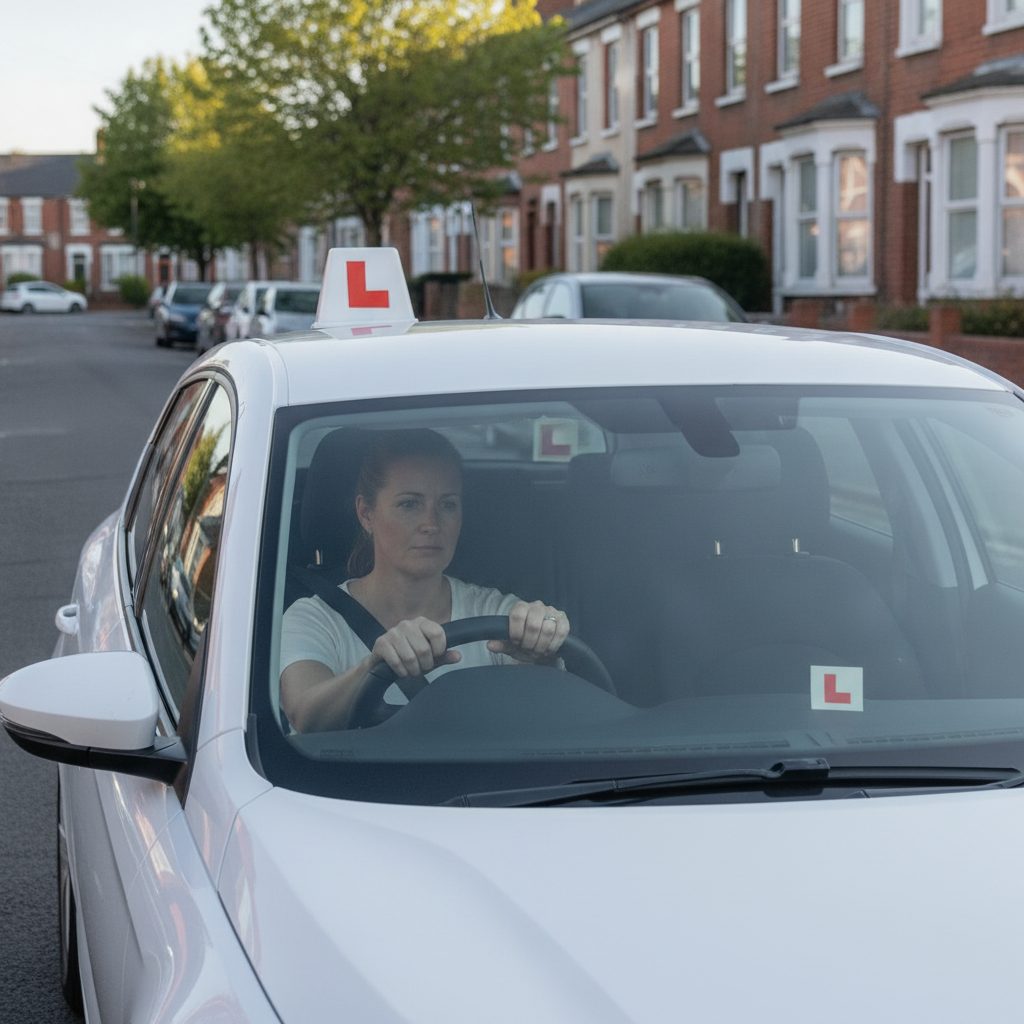
The Direct Rule: Why L Plates Are Prohibited
When preparing for the Approved Driving Instructor (ADI) Part 2 test of driving ability, many trainees wonder whether their car must display learner plates. The answer is clear: you must not display L plates (or D plates in Wales) during the test. If your car has magnetic plates, stickers, or a roof sign, you must remove or completely cover them before arriving at the driving test centre.
The reasoning behind this rule comes down to legal status and test objectives. The ADI Part 2 test is an expert-level driving assessment. You already hold a full UK driving licence and are demonstrating advanced road safety, vehicle handling, and anticipation. You are not a learner driver. Displaying L plates gives road users a false impression that you are undergoing basic instruction, which can alter how other drivers interact with your vehicle during the assessment.
If you arrive at the test centre with L plates fitted, the examiner will ask you to remove them before the test can begin. If you cannot remove or blank out fixed stickers or roof signs securely, the examiner will cancel the test, and you will lose your test fee.
Core DVSA Vehicle Requirements for ADI Part 2
While you do not need L plates, your vehicle must meet strict DVSA standards to be accepted for the assessment. The test lasts around 60 minutes and covers various road conditions, high-speed dual carriageways, and precision manoeuvres. Your car must be fully compliant so the examiner can conduct the test safely.
To qualify for the Part 2 test, your vehicle must:
- Be taxed and have a valid MOT certificate (if over three years old).
- Be covered by suitable motor insurance that allows you to take an ADI test.
- Be a standard production saloon, hatchback, or estate car with four wheels.
- Have a functioning speedometer capable of measuring speed in miles per hour.
- Be capable of reaching normal road speeds without restricted power.
- Have no active warning lights showing on the dashboard, including tyre pressure or airbag warnings.
- Have working seat belts and head restraints fitted for both front seats.
- Be smoke-free and clean inside.
Certain convertible models and small city cars are banned from driving tests due to poor all-round visibility or known recall issues. Always check the official DVSA list of unsuitable vehicles if you intend to use a personal compact car or convertible.
Mirrors, Dual Controls, and Dashcams
One mandatory accessory often overlooked by candidates is the additional interior rear-view mirror. Just as in a learner driving test, the examiner must be able to observe your rearward vision without turning their head or blocking your own mirror line. You must supply and fit an extra interior mirror for the examiner on the passenger side of the front windscreen.
Dual controls are not legally required for the ADI Part 2 exam. You may use a standard car without dual controls, provided it meets all other safety and mechanical checks. However, if your car is fitted with dual controls, they must be in full working order. The pedals on the passenger side must not be obstructed by loose floor mats or debris.
Dashcams are permitted, but they must face outward through the windscreen or rear window only. Internal cameras recording video or audio inside the cabin are strictly forbidden during DVSA tests. If your dashcam records internal footage or audio, you must turn those functions off or disconnect the unit before meeting your examiner.
Using a Tuition Car, Hire Vehicle, or Personal Car
Trainee instructors often use a vehicle borrowed from a driving school, an instructor trainer, or a specialist dual-control hire company. Each option carries specific rules you need to follow on test day.
If you use a branded driving school car, you must remove the roof sign entirely. Magnetic signs along the doors or bonnet do not necessarily disqualify the vehicle, but any references to learner driver status or L-plate graphics incorporated into the livery must be taped over with opaque tape. Many trainees practicing in areas like driving schools in Reading choose to train in the exact vehicle they will use for their commercial lessons, which makes adjusting to the car straightforward.
Using a rental or hire car is allowed only if the hire company provides written proof that the vehicle is insured for a driving test. Standard car hire policies routinely exclude driving tests. You must present this confirmation letter to the examiner if requested. For digital tools, administrative resources, and test preparation aids, you can explore Rwapp to streamline your instructor journey.
Vehicle Checklist: Part 2 vs Part 3 Requirements
The vehicle guidelines change significantly between the ADI Part 2 driving ability test and the ADI Part 3 instructional ability test. Review the comparison below to ensure you prepare the correct setup for your test.
| Requirement | ADI Part 2 (Driving Ability) | ADI Part 3 (Instructional Ability) |
|---|---|---|
| L Plates / D Plates | Prohibited (must be removed) | Mandatory (if pupil is a learner) |
| Roof Sign / Box | Must be removed | Permitted or required by school |
| Extra Interior Mirror | Mandatory for examiner | Mandatory for examiner / pupil checks |
| Dual Controls | Optional | Recommended (standard on tuition cars) |
| Vehicle Livery | Allowed (L markings taped over) | Fully allowed |
Common Vehicle Flaws That Cancel Tests on the Day
Arriving with L plates on display is only one of several avoidable reasons examiners turn candidates away. Test centres operate on strict timetables, and examiners will not wait while you resolve mechanical faults or hunt for paperwork.
Pay close attention to tyre condition. The legal minimum tread depth across the UK is 1.6mm across the central three-quarters of the tyre. However, examiners inspect tyres thoroughly before sitting in the vehicle. If a tyre shows sidewall bulges, cuts, or uneven wear that breaches legal limits, the test will be cancelled immediately.
Ensure that all exterior lights operate properly. Check your brake lights, reverse lights, headlights, and indicators before driving to the test centre. If a bulb blows on the way, replace it before you sign the test declaration sheet inside the waiting room.
Cleanliness is another critical factor. Examiners can refuse to enter a car that is excessively dirty, smells strongly of smoke, or contains loose items in the footwells. Clear out any clutter, wipe down the dashboard, and ensure the passenger seat is clean and fully adjustable.
Building Your Training Routine
Passing the ADI Part 2 test demands consistent concentration, flawless observation, and smooth vehicle control. You are allowed a maximum of six driving faults (minors) across the one-hour drive, with zero serious or dangerous faults. Because the standard is so high, treating your test vehicle with the same professionalism you would show to a paying client is essential.
Familiarise yourself thoroughly with the tell-tale show me, tell me questions, ensure your secondary mirror stays firmly mounted, and remove any learner signage well before you arrive at the test centre gates. By keeping your vehicle compliant and free of L plates, you can focus entirely on delivering a confident, polished drive.
Run your whole driving school from your phone.
Get early access