26 Aug 2026 · Roadworthy
How Hard Is It to Pass ADI Part 2?
Wondering how hard is it to pass ADI Part 2? Learn the pass rates, common test faults, and practical techniques to pass your driving ability test.
Understanding the ADI Part 2 Standard
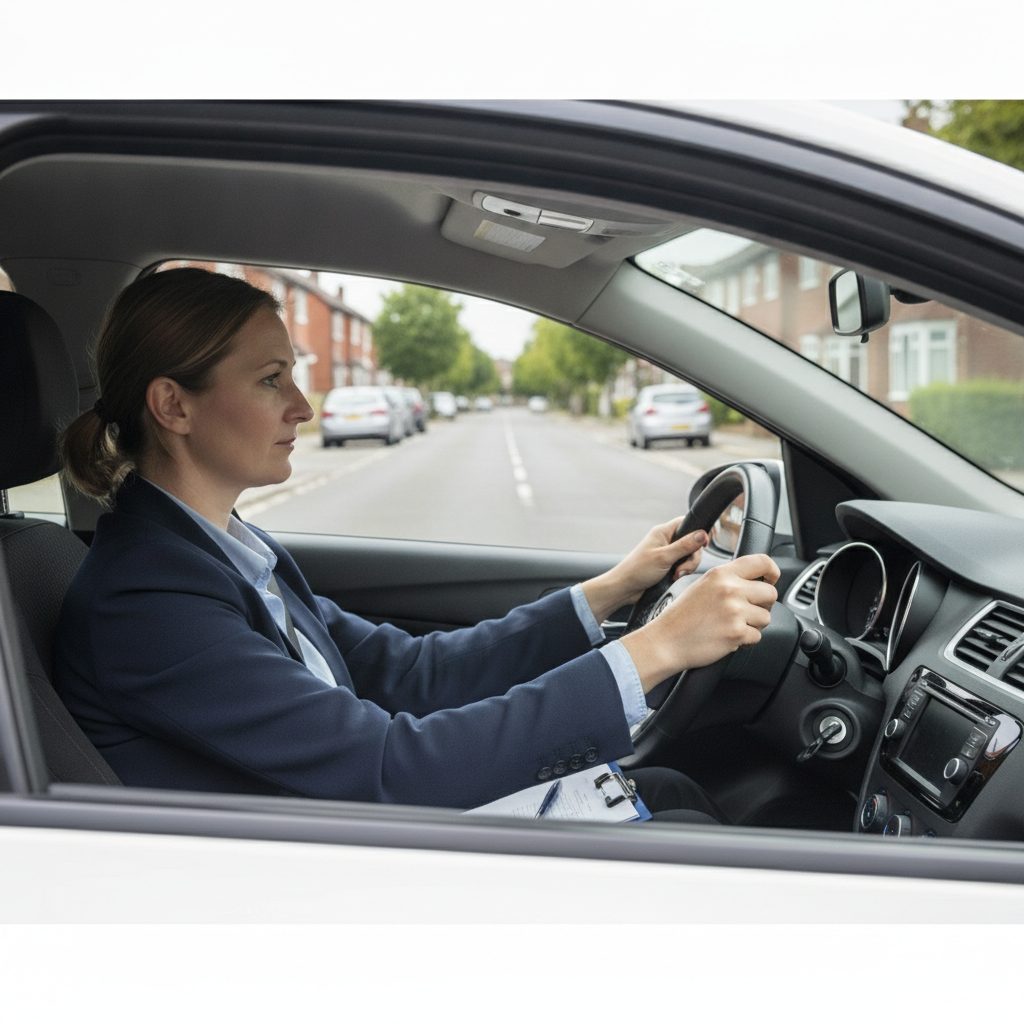
The Approved Driving Instructor (ADI) Part 2 test is an advanced practical assessment of your driving ability. You must prove to a Driver and Vehicle Standards Agency (DVSA) examiner that you can handle a car with complete control, foresight, and road safety awareness. Many experienced drivers assume their clean driving licence and years behind the wheel guarantee an easy pass. That assumption is the primary reason why so many fail.
The standard expected is not merely safe driving. It is an expert standard. You are expected to demonstrate textbook vehicle handling, flawless observation routines, and proactive hazard planning. The examiner observes not only what you do, but how smoothly and systematically you do it. Any sign of hesitation, rushed decision-making, or lazy observation will result in faults.
You have a maximum of three attempts to pass Part 2. If you fail three times, you must wait until two years have elapsed from the date you passed your Part 1 theory test before starting the entire qualification process again from scratch.
Official Pass Rates and Difficulty
According to published DVSA figures, the national pass rate for the ADI Part 2 test consistently sits between 55% and 60%. While this is slightly higher than the standard learner test pass rate, consider the candidate pool: every person taking Part 2 has held a full driving licence for at least three years, passed a 100-question advanced theory test, and actively invested in training.
The difficulty stems from the strict margin for error. On a standard learner test, up to 15 driving faults are permitted. On Part 2, you are allowed a maximum of 5 driving faults across an extended 60-minute route. A single serious or dangerous fault results in immediate failure.
Driving test centres across the UK present distinct geographical challenges. Trainees preparing in dense, multi-lane urban hubs similar to test routes used by driving schools in Reading face relentless lane discipline checks and complex spiral roundabouts. In contrast, trainees in semi-rural locations like those covered by driving schools in Chard must handle blind bends, narrow passing places, and unpredictable country road hazards. Both environments demand total road competence.
ADI Part 2 vs Standard Learner Test
Understanding why Part 2 is difficult requires comparing it directly with the learner test you passed years earlier. The expectations, duration, and mechanical demands are significantly higher.
| Test Component | Standard Learner Test | ADI Part 2 Test |
|---|---|---|
| Driving Duration | Approximately 38 to 40 minutes | Approximately 60 minutes |
| Permitted Driving Faults | Up to 15 minor faults | Maximum of 5 driving faults |
| Eyesight Assessment | Read plate from 20 metres | Read plate from 26.5 metres (or 27.5 metres for older plates) |
| Manoeuvres Required | 1 chosen at random | 2 manoeuvres plus possible emergency stop |
| Vehicle Safety Questions | 1 'tell me' and 1 'show me' | 3 'tell me' and 2 'show me' questions |
| Attempt Limit | Unlimited attempts | Strict limit of 3 attempts |
Common Reasons Trainees Fail
Most failures on Part 2 do not occur because candidates cannot steer or park. They happen because candidates revert to casual everyday driving habits under pressure. Examiners observe common categories of faults on almost every unsuccessful sheet.
- Mirror Routine Failures: Checking mirrors too late, such as glancing in the interior mirror after applying the brake rather than well before braking. Missing the blind-spot check on moving off or after completing a manoeuvre is an instant serious fault.
- Speed and Progress: Driving far below the posted speed limit out of over-caution. If the road is clear, dry, and conditions allow 40 mph, driving at 28 mph shows a lack of confidence and will accumulate progress faults.
- Junction Observations: Emerging into a gap that forces an oncoming vehicle to slow down or change road position, even slightly. Trainees often misjudge the closing speed of approaching traffic when under test pressure.
- Lane Discipline on Roundabouts: Cutting across lane markings on multi-lane roundabouts or drifting into adjacent lanes on exit paths without early, deliberate mirror checks.
- Hand and Foot Controls: Coasting with the clutch pedal depressed for long distances prior to stopping, letting the steering wheel spin back through the hands uncontrolled, or harsh braking near pedestrian crossings.
How the Scoring System Works
During the drive, the examiner marks your performance using the standard driving test report form, categorising errors into three levels: driving faults (minors), serious faults, and dangerous faults.
A driving fault is an error that is not potentially dangerous but represents a lapse in complete competence. For example, failing to check the left mirror before signalling left on a quiet residential road. If you commit the same driving fault repeatedly, the examiner can escalate that repeated minor error into a single serious fault for persistent habit.
A serious fault occurs when an action or omission creates potential danger to you, the examiner, or another road user. For example, straddling two lanes approaching a roundabout or entering a box junction when the exit is blocked. A dangerous fault is recorded when direct physical danger occurs, forcing another road user or the examiner to take evasive action.
How to Prepare and Unlearn Bad Habits
To pass Part 2 on your first attempt, you must treat your driving as a deliberate craft rather than a subconscious habit. Self-assessment alone is rarely sufficient because drivers cannot easily spot their own subtle blind spots and control faults.
Book professional coaching with an experienced Ordit-registered trainer. Have them conduct realistic mock tests under strict exam conditions. Ask them to grade your driving with zero leniency, treating six minors as a failure. This builds familiarity with the pressure and reveals specific weaknesses in your Mirror-Signal-Manoeuvre (MSM) routine.
Many trainees who qualify establish efficient business processes early using software platforms like rwapp.co to organise their future pupil schedules. Once you pass your subsequent Part 3 test and launch your career, celebrating your pupils' test achievements with tools like a dedicated pass celebration feature becomes part of your everyday instructional routine. Building that professional instructor mindset during Part 2 training accelerates your progress.
Practise commentary driving aloud during every private practice session. State what hazards you see, the mirrors you check, your planned gear, and the road surface conditions. Commentary forces your brain to stay ahead of the car and prevents the auto-pilot mode that causes test-day mistakes.
Handling Test Day Nerves and Routine
Test anxiety is responsible for a substantial portion of Part 2 failures. Candidates know they only have three attempts, which introduces intense performance pressure. Preparing a structured routine for the day of your test helps keep your focus sharp.
Arrive at the test centre with 15 minutes to spare. Avoid arriving an hour early, which simply increases nervous rumination. Ensure your car is spotless inside and out, that your tyres meet all legal pressure and tread depth requirements, and that your dual interior mirror is securely fitted for the examiner.
If you make a minor mistake during the drive, let it go immediately. Many candidates commit one small fault, assume the test is ruined, lose their concentration, and commit a serious fault two minutes later. Treat every junction as a clean sheet. Focus entirely on the immediate road ahead.
Run your whole driving school from your phone.
Get early access