18 Aug 2026 · Roadworthy
Who Can Sponsor a PDI? UK Trainee Driving Rules
Find out who can sponsor a PDI in the UK. Learn the DVSA rules for trainee driving instructor sponsorship, franchises, and ADI requirements.
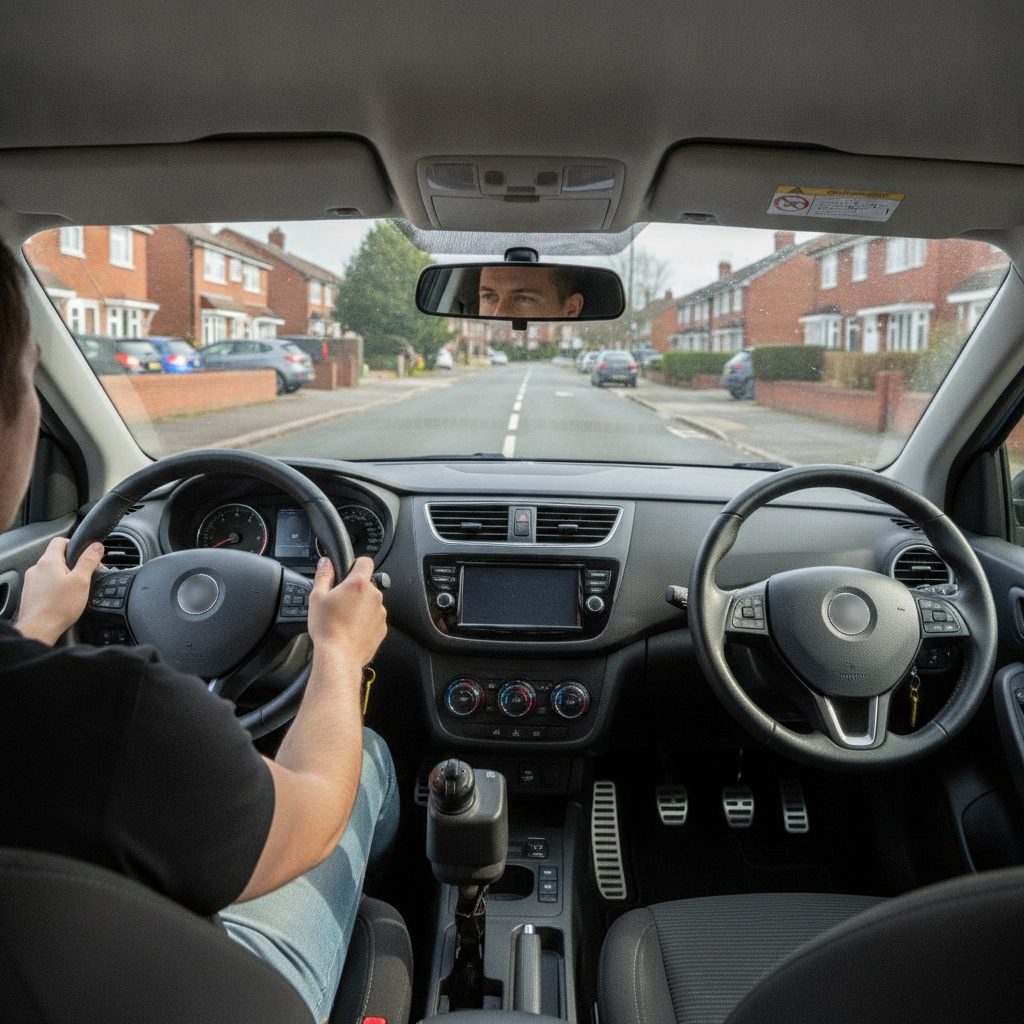
Understanding the PDI trainee licence and sponsorship
The Driver and Vehicle Standards Agency (DVSA) allows qualifying instructors to apply for a trainee licence, commonly known as a pink badge. This badge lasts for six months and lets you charge pupils for driving tuition while you prepare for your final qualification exam, the ADI Part 3 test of instructional ability.
You cannot simply apply for a trainee licence on your own. The DVSA mandates that every PDI must have a formal sponsor who agrees to supervise their development, oversee their pupil bookings, and confirm that required training benchmarks are met. Sponsorship bridges the gap between private practice and professional instruction, ensuring pupil safety while instructors build practical road experience.
Who is legally allowed to sponsor a PDI?
Under DVSA regulations, a sponsor must be an Approved Driving Instructor (ADI) who runs a driving school, or an organisation that employs or contracts ADIs. The sponsor accepts direct responsibility for your conduct and ongoing development on the road.
To qualify as a sponsor, the individual or business entity must satisfy specific criteria:
- They must operate an established driving school or tuition business registered in the UK.
- They must have at least one fully qualified ADI working within the business for every trainee licence holder they sponsor. A driving school cannot take on five PDIs if it only has two qualified instructors on its books.
- The supervising instructor must have held their ADI licence for a sufficient period and maintain a clean record with the DVSA.
- They must agree to complete and sign the legal declaration on the ADI 21T application form.
Trainees often use modern tools such as Rwapp to track their daily schedules, manage pupil communication, and stay organised while balancing their sponsor's operational requirements.
National driving schools vs independent ADI sponsors
Prospective instructors generally choose between two distinct types of sponsors: large national driving school franchises or local, independent driving instructors.
| Sponsor Type | Key Advantages | Potential Drawbacks |
|---|---|---|
| National Franchise (e.g., AA, RED, Bill Plant) | Immediate pupil supply, brand recognition, structured Part 3 training resources | Higher weekly franchise fees (£50 to £250), vehicle lease commitments, fixed contract terms |
| Independent Driving School / Local ADI | Lower overheads, flexible terms, personalised one-to-one mentoring | You may need to find your own pupils; training structure depends heavily on the individual trainer |
| ORDIT-Registered Trainer | Standardised, DVSA-inspected training methods; specialist Part 3 coaching | May charge separate tuition fees alongside franchise costs |
National schools offer a steady pipeline of learners, which helps you log the hours necessary to build your teaching skills quickly. However, independent sponsors often provide closer personal support. Many independent trainers are ORDIT (Official Register of Driving Instructor Training) qualified, meaning their training delivery has been formally evaluated by the DVSA.
Sponsor responsibilities and the ADI 21T form
Sponsorship is not just a badge endorsement on paper. When a sponsor signs your ADI 21T form, they enter into a formal arrangement with the DVSA. They certify that you have completed at least 40 hours of initial training with a qualified ADI within the preceding six months, covering all areas of the required syllabus.
Throughout your six months on a pink badge, your sponsor must:
- Ensure you do not advertise independently if your licence terms tie you strictly to their school branding.
- Maintain records of your initial 40 hours of training and any subsequent development hours.
- Provide regular mentoring sessions to identify faults in your teaching technique before your Part 3 assessment.
- Keep proof of all training logs available for inspection, as the DVSA can audit both trainee and sponsor at any point.
Using digital scheduling solutions like Rwapp simplifies lesson logging, ensuring that records remain clear and accessible if the DVSA requests verification of your working patterns.
Supervision models: Option 1 vs Option 2
When applying for a trainee licence, your sponsor must select one of two supervision methods on the ADI 21T form. This choice dictates the training obligations you must fulfill during the six-month licence term.
Option 1: 20 hours of additional training
Under Option 1, you must receive an additional 20 hours of formal training from an ADI during the first three months of holding your pink badge. At least five of these hours must be completed in the presence of a qualified instructor while you deliver tuition to actual learners. You must submit the completed form ADI 21TL to the DVSA before the three-month mark, signed by both you and your sponsor.
Option 2: 20% direct supervision
Under Option 2, your sponsor agrees to supervise at least 20% of all tuition hours you deliver. The supervising ADI sits in the back of the car while you teach your pupils. You must keep a running log of all teaching hours and all supervised hours, countersigned by your sponsor.
Option 1 is by far the most popular route. It gives the trainee greater independence to conduct lessons while establishing a structured timeline to complete the extra 20 hours of preparation.
How to evaluate potential sponsors
Choosing the right sponsor has a major impact on whether you pass your Part 3 exam on your first attempt. Before signing an agreement, ask prospective sponsors the following questions:
- What is the instructor-to-trainee ratio? Ensure the business has enough fully qualified ADIs to meet DVSA limits comfortably.
- What are the weekly franchise fees? Confirm whether fees apply during holiday weeks or while you await your Part 3 test date. Typical weekly fees range from £50 to £200.
- Who conducts your additional training? Check if the trainer is ORDIT-registered or an experienced local instructor with a proven Part 3 track record.
- How are pupil leads allocated? Clarify whether the school supplies pupils directly or expects you to source your own learners in your local postcode.
- What happens if you leave? Check your contract for notice periods, badge return rules, and potential financial penalties.
Changing your sponsor during your licence period
You are not trapped if your relationship with your initial sponsor breaks down, or if the quality of training is inadequate. The DVSA permits trainees to change sponsors while holding an active trainee licence.
To transfer your sponsorship, you must submit a new form ADI 21T with your new sponsor's details to the DVSA, along with your current badge. You cannot teach or charge for lessons during the gap between leaving your old sponsor and receiving your updated trainee licence badge showing your new school's details.
If you fail your Part 3 exam during your sponsorship, you must discuss remedial training immediately with your sponsor. You are allowed three attempts at Part 3; your sponsor must certify that additional training has taken place before subsequent attempts if required by the DVSA.
Run your whole driving school from your phone.
Get early access