14 Aug 2026 · Roadworthy
Will AI take over driving instructors?
Will AI take over driving instructors? Discover why autonomous tech, simulators, and AI cannot fully replace human ADIs on UK roads just yet.
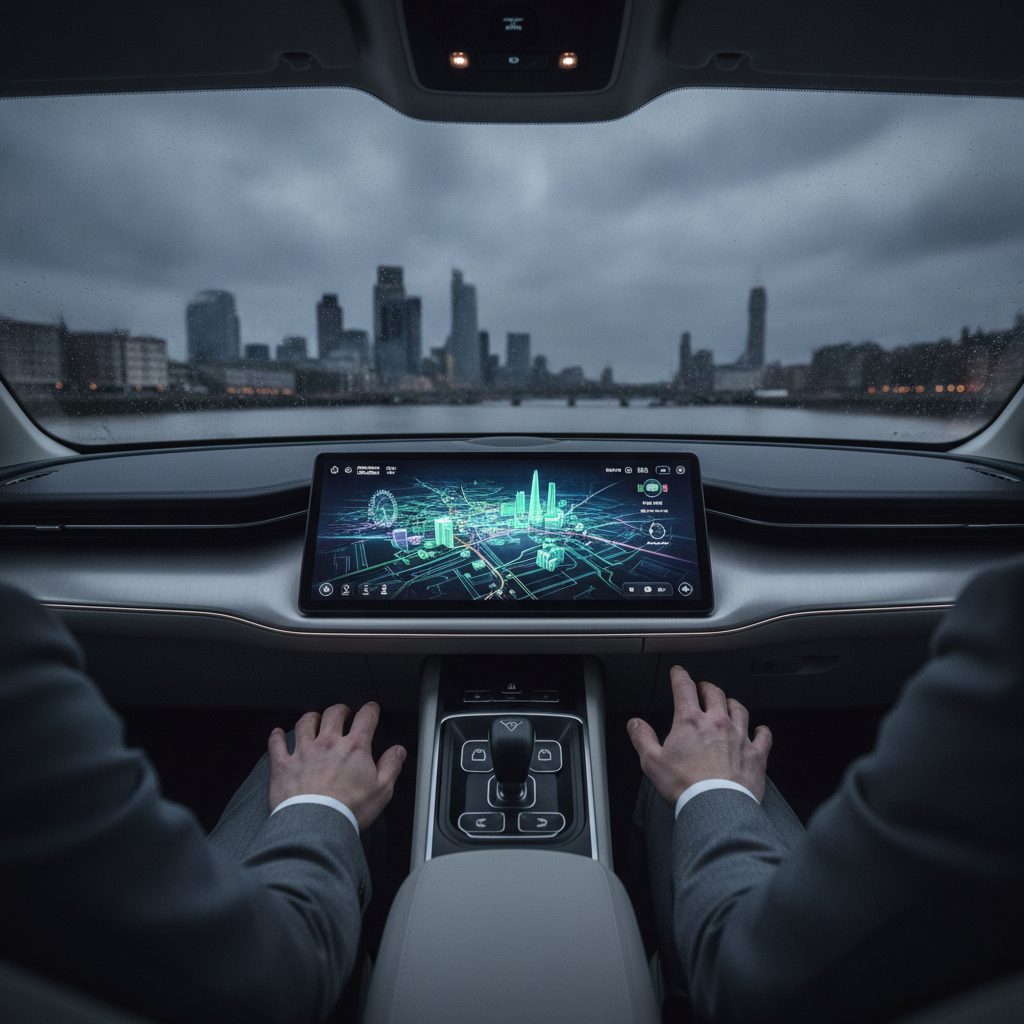
The rise of AI in driver education
Artificial intelligence is already reshaping how learner drivers prepare for the road. Intelligent algorithms power contemporary theory test revision apps, tracking learning curves and predicting when a student is ready to sit the DVSA hazard perception test. Virtual reality simulators now expose students to extreme weather and complex junctions before they ever turn an ignition key in real life.
In-car telemetry systems also collect vast amounts of driving data. Modern telematics boxes score acceleration, cornering forces, and braking habits with exact precision. Some international tech companies are even trialling automated coaching software that uses in-cabin cameras and sensors to point out lane deviations or missed mirror checks in real time. While these advancements are impressive, they target supplemental learning rather than replacing the complete dual-control dynamic.
The limits of machine learning in the passenger seat
Teaching someone to drive safely is not purely about rule enforcement. It requires split-second physical interventions and anticipating human error. When a novice driver panics and mistakes the accelerator for the brake pedal at an active roundabout in Bath, an AI system cannot provide the physical dual-brake override with the nuanced timing of an Approved Driving Instructor (ADI).
Machine learning models depend on predictable patterns and clear sensor inputs. UK roads present irregular road layouts, faded road markings, temporary traffic lights, and unpredictable pedestrians. An AI can identify a red light, but it struggles to read the subtle body language of a cyclist preparing to swerve around a pothole. Human instructors constantly assess not just the road, but the pupil's state of mind, grip on the steering wheel, and eye direction.
Emotional intelligence and nervous pupils
Learning to drive is an emotionally charged experience. Many pupils suffer from severe anxiety, fear of failure, or acute panic after stalling in busy traffic. A computer voice issuing step-by-step corrections often exacerbates stress instead of soothing it.
Human instructors adapt their tone, pacing, and teaching style to the individual. An instructor in Hull might spend twenty minutes debriefing a near-miss, building back a student's confidence through empathy and structured encouragement. AI algorithms lack empathy: they can detect elevated heart rates or erratic steering, but they cannot provide the reassuring human presence that keeps a novice from abandoning their lessons entirely.
DVSA regulations and legal accountability
The Driver and Vehicle Standards Agency (DVSA) maintains strict qualification standards for professional driver trainers. To charge money for instruction in the UK, an individual must pass rigorous theory, driving ability, and instructional ability tests to appear on the ADI register. The legal liability of supervising a provisional licence holder sits firmly with the qualified person in the front passenger seat.
If an autonomous teaching system were to fail, causing a fatal crash during a lesson in Dover, the question of legal culpability becomes immensely tangled. Does blame rest with the car manufacturer, the software developer, or the learner behind the wheel? Until insurance structures, statutory legal definitions, and national test frameworks overhaul their entire approach to supervisor liability, autonomous systems cannot legally supervise a provisional driver on public highways.
Comparison: AI systems vs human instructors
To understand why a total takeover is unlikely in the medium term, we can contrast how artificial intelligence systems and professional instructors handle core responsibilities.
| Capability | AI and Automated Systems | Human ADIs |
|---|---|---|
| Physical safety intervention | Automated emergency braking only | Dual controls, steering guidance, preemptive verbal cues |
| Route adaptation | Data-driven based on traffic congestion | Tailored to student confidence and specific weaknesses |
| Understanding road nuance | Rule-bound, vulnerable to obscure local conditions | Contextual, understands local driver habits and informal hand gestures |
| Emotional support | Scripted feedback without genuine empathy | Active listening, reassurance, and tailored motivational strategies |
| Data collection and analysis | Continuous, millisecond telemetry logging | Observational, focused on behavioural habits and test readiness |
How instructors will use AI as a tool
Instead of wiping out the profession, artificial intelligence is transforming into a powerful teaching aid. Forward-thinking driving schools and independent instructors are adopting AI tools to cut down administrative workloads and deliver deeper technical insights to their pupils.
Instructors can integrate technology into their everyday work in several ways:
- Automated administration: Platforms like Rwapp and smart scheduling tools allow instructors to automate diary management, pupil communications, and lesson reminders, saving hours of unpaid weekly admin.
- Objective driving diagnostics: Sensor-based apps track braking smoothness, clutch control, and gear selection, providing pupils with clear homework summaries between paid lessons.
- Targeted mock test reviews: Video telematics can highlight exact coordinates where a learner repeatedly hesitates or speeds, allowing the instructor to focus on those trouble spots during the next session.
- Theory integration: AI revision tools pinpoint the exact Highway Code sections where a learner struggles, letting the instructor reinforce those topics during practical road time.
What the next decade looks like for ADIs
Over the next ten to twenty years, the job description of a driving instructor will undoubtedly evolve. As autonomous and semi-autonomous features become standard in consumer vehicles, instructors will need to teach pupils how to manage advanced driver assistance systems (ADAS), such as lane-keep assist, adaptive cruise control, and automated parking.
The core requirement for human judgment, safety supervision, and coaching will persist. Even if Level 4 and Level 5 fully autonomous cars eventually become accessible to the wider public, the transition will take decades. Millions of conventional manual and automatic vehicles will remain on UK roads, and drivers will still need to obtain a full licence to operate them safely. Driving instructors will not be replaced by AI; rather, instructors who harness modern technology will outpace those who resist it.
Run your whole driving school from your phone.
Get early access